
Home › NHL Realignment Project
What Realignment Means for a League

Realignment is the quietest radical act in professional sport. Nothing about the rules changes, no trophy is redesigned, and the games look identical the next night — and yet the entire shape of a league has been rearranged, and every schedule from that point forward reflects a decision that was made in a meeting room.
This article explains what realignment actually means and why it generates so much argument.
The basic idea
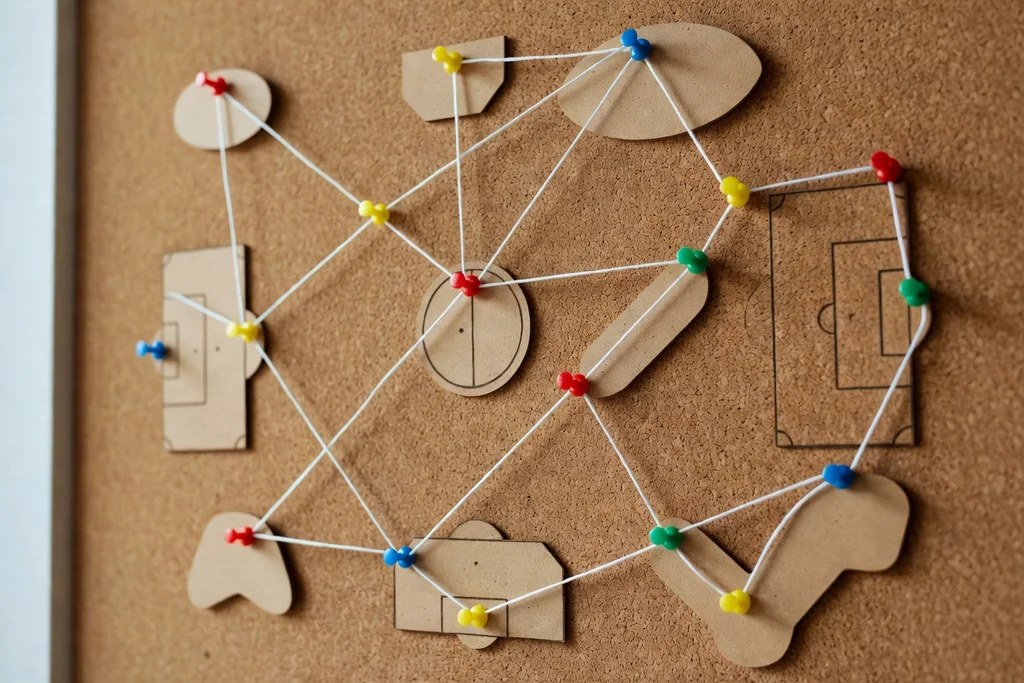
Realignment means changing which teams are grouped together. Conferences and divisions are not natural features of a sport; they are administrative choices about who plays whom, how often, and under what conditions. Redrawing them changes the competitive landscape without touching a single rule of play.
What realignment is trying to achieve
Every realignment proposal is an argument about priorities. Some emphasise geography, keeping travel manageable and rivalries local. Others emphasise competitive balance, ensuring that the path to a championship does not depend on which group a team happens to be in. These goals frequently conflict, and the resulting proposals are compromises rather than solutions.
Why it is contentious
Fans care about realignment because it moves the furniture of their emotional life. A team placed in a different group loses familiar opponents and gains unfamiliar ones; historic rivalries can be diluted, and new ones have to be built from scratch over years. No proposal can satisfy everyone, because the thing being redistributed is not just travel distance but meaning.
Common approaches to regrouping
| Approach | Main goal | Trade-off |
|---|---|---|
| Geographic | Short travel and local rivalries | Uneven competitive strength |
| Competitive | Balanced difficulty for all | Longer and stranger trips |
| Historic | Preserve old groupings | Ignores how the map has changed |
| Hybrid | Balance several goals | Complex and hard to explain |
Questions a proposal should answer
- How many times does each team meet each opponent?
- What happens to playoff qualification in each group?
- How much travel does the change add or remove?
- Which rivalries are preserved, and which are weakened?
What travel really costs
Travel does not simply make players tired; it takes away practice. A long trip means days spent in transit and hotel rooms instead of on the ice, which slows the installation of any new system. That is why teams guard their practice time so fiercely and why a heavy road stretch can leave a mark that lasts well after the trip ends. The cost is measured in repetitions lost, not just in hours slept.
Rivalries are built by repetition
A rivalry is rarely created by a single incident. It grows out of meeting the same opponent often enough that the games acquire history — the same matchups, the same grudges, the same crowd. That is why grouping teams geographically tends to produce better rivalries than any marketing campaign, and why a well-designed structure is really an argument about who should see whom, and how often.
Reading a box score honestly
A box score tells you what happened, not why. Shots, hits and minutes are records of events, and events without context can mislead badly: a team can be outplayed and still win, or dominate and lose. Used well, the numbers are a set of questions. Used badly, they become a verdict. The discipline is to treat every line as the beginning of an inquiry rather than the end of one.
The value of a slow build
Building a team is slower than fans would like and faster than it sometimes looks. Prospects need years, systems need months, and chemistry needs game after game of shared experience. Any plan that assumes instant results is really a plan to churn through people. The organisations that last are the ones willing to accept a boring middle — a season or two of being unremarkable while the foundation sets.
Where opinions are strongest
The loudest arguments in hockey are usually about things nobody can measure cleanly: effort, leadership, toughness, who deserves credit. That is not a reason to avoid them, but it is a reason to hold them lightly. When a debate has no referee, the useful move is to state your assumptions out loud. Half of every hockey argument evaporates the moment both sides say what they are taking for granted.
The fan's job description
Being a fan is not a passive state. It involves choosing sources, deciding what to care about, and resisting the urge to treat every rumour as a promise. The supporters who enjoy the sport most tend to be the ones with a short list of things they follow closely and a long list of things they happily ignore. Attention is the scarce resource in a long season, and spending it deliberately is a skill.
Structure beats inspiration
A single brilliant shift can win a game, but it cannot win a month. What survives a long season is structure: the habits a group falls back on when it is tired, the shape it keeps when the game gets chaotic, the decisions that are made automatically because they have been rehearsed hundreds of times. Inspiration is the fun part. Structure is the part that is still there in March.
What changed and what did not
Hockey has changed a great deal in how it is played and surprisingly little in what it rewards. Speed matters more, space is defended differently and goaltending is a profession of its own, but the underlying currencies — possession, territory, patience and the ability to win the moments that decide games — have been stable for a very long time. Noticing the constants is as useful as tracking the fashions.
Realignment is not a puzzle with a correct answer. It is a negotiation about values, dressed up in the language of geography — and that is exactly why it is worth writing about.
Read next
Conferences and Divisions: How They Shape a Season
Why grouping decides rivalries, travel and who meets whom in the playoffs.
Travel, Time Zones and the Schedule Debate
What a map costs in hours and why a fair schedule is harder than it looks.
Relocation and Expansion: How Cities Join a League
Ownership, arenas and patience: the steps between an idea and a roster.