
Home › NHL Realignment Project
Relocation and Expansion: How Cities Join a League
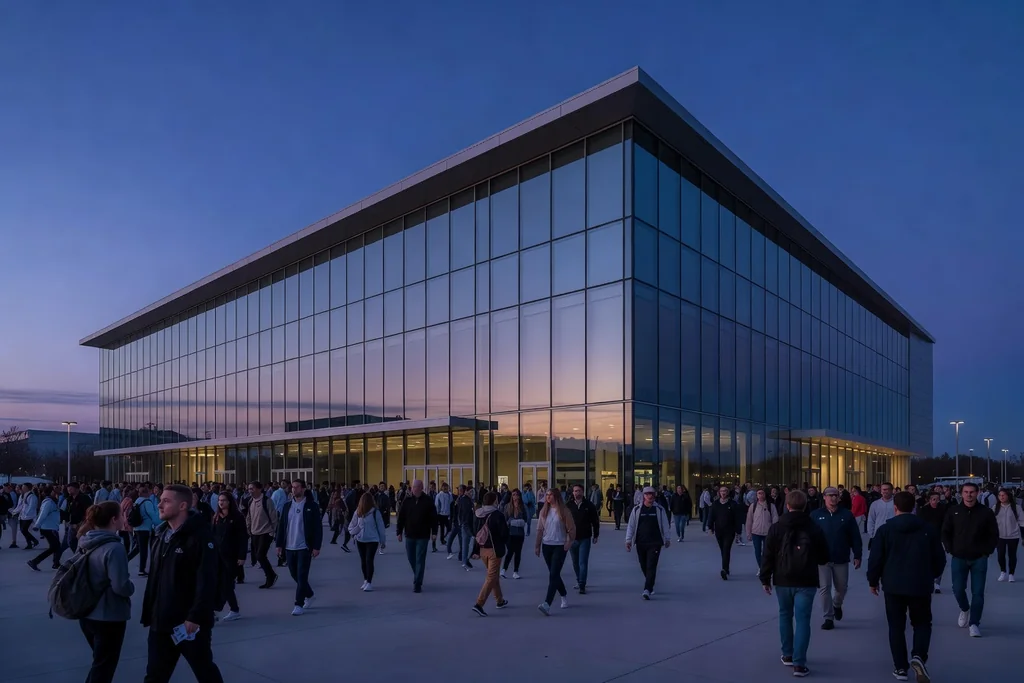
How does a city get a team? The answer is almost never a single decision. Whether a league grows into a new market or moves an existing club, the process is a long sequence of steps, each of which can stop the whole thing.
This article walks through the mechanics.
Ownership comes first
Before anything else, there has to be someone willing to own the team and accept the losses of the early years. Ownership is the entry ticket, and it is the most commonly underestimated requirement: a market with enthusiasm but no stable ownership is not a candidate, and a market with ownership but no building is only slightly further along.
The building question
A suitable arena is effectively non-negotiable. That means the real work happens in local politics long before it happens in a league office: land, funding, agreements, timelines. A project can be approved in principle and still fail for years because the building does not exist.
Expansion versus relocation
Expansion adds a team and a market at the same time. Relocation moves an existing club, which usually means one city loses something at the moment another gains it. The two paths generate very different public conversations, but they share the same underlying requirements and the same long timelines.
Stages a bid generally passes through
| Stage | What has to be true |
|---|---|
| Interest | A credible group states an intention |
| Facilities | An arena plan is real, not aspirational |
| Approval | The league accepts the market into its process |
| Build-up | Staff, branding and a roster are assembled |
Why it takes so long
- Arena construction and renovation run on their own clock.
- Approval processes involve many parties with different interests.
- A relocated club has to rebuild a roster while a city rebuilds a fanbase.
- Fans in the departing city are part of the story and cannot be ignored.
The value of a slow build
Building a team is slower than fans would like and faster than it sometimes looks. Prospects need years, systems need months, and chemistry needs game after game of shared experience. Any plan that assumes instant results is really a plan to churn through people. The organisations that last are the ones willing to accept a boring middle — a season or two of being unremarkable while the foundation sets.
Where opinions are strongest
The loudest arguments in hockey are usually about things nobody can measure cleanly: effort, leadership, toughness, who deserves credit. That is not a reason to avoid them, but it is a reason to hold them lightly. When a debate has no referee, the useful move is to state your assumptions out loud. Half of every hockey argument evaporates the moment both sides say what they are taking for granted.
The fan's job description
Being a fan is not a passive state. It involves choosing sources, deciding what to care about, and resisting the urge to treat every rumour as a promise. The supporters who enjoy the sport most tend to be the ones with a short list of things they follow closely and a long list of things they happily ignore. Attention is the scarce resource in a long season, and spending it deliberately is a skill.
Structure beats inspiration
A single brilliant shift can win a game, but it cannot win a month. What survives a long season is structure: the habits a group falls back on when it is tired, the shape it keeps when the game gets chaotic, the decisions that are made automatically because they have been rehearsed hundreds of times. Inspiration is the fun part. Structure is the part that is still there in March.
What changed and what did not
Hockey has changed a great deal in how it is played and surprisingly little in what it rewards. Speed matters more, space is defended differently and goaltending is a profession of its own, but the underlying currencies — possession, territory, patience and the ability to win the moments that decide games — have been stable for a very long time. Noticing the constants is as useful as tracking the fashions.
Disagreement as a feature
The best hockey writing is written by people who disagree with each other. A league with one correct opinion would be a dull league, and a journal with one voice would be a pamphlet. Arguments about style, structure and value are not noise around the sport; they are the sport, carried on in words between the games. Reading widely is the only way to hear more than one of them.
The long view
Hockey looks different depending on how far back you stand. From a single game, everything is dramatic. From a season, patterns emerge. From a decade, the fashions become visible: how systems arrived, spread, and were answered. Choosing the right distance is most of what makes an argument either useful or merely loud, and it is a choice the reader can always make.
Practice, patience and the honest assessment
Anyone who has watched a rebuilding team knows the uncomfortable middle: too good to be rewarded with the best picks, too thin to make a run. The temptation is to force a decision — trade for now or sell for later. The honest assessment is usually to wait, keep the process clean, and refuse to let a bad month rewrite a good plan. That is much harder to sell to a fanbase than a headline, which is exactly why it is worth writing about.
In hockey, geography is a permanent subject because the map is never truly settled. Cities change, ownership changes, and every decade or so the league is asked again whether its shape still matches the continent it plays on.
Read next
What Realignment Means for a League
The promise and the cost of moving teams between conferences and divisions.
Conferences and Divisions: How They Shape a Season
Why grouping decides rivalries, travel and who meets whom in the playoffs.
Travel, Time Zones and the Schedule Debate
What a map costs in hours and why a fair schedule is harder than it looks.