
Special Teams Explained: Power Play and Penalty Kill
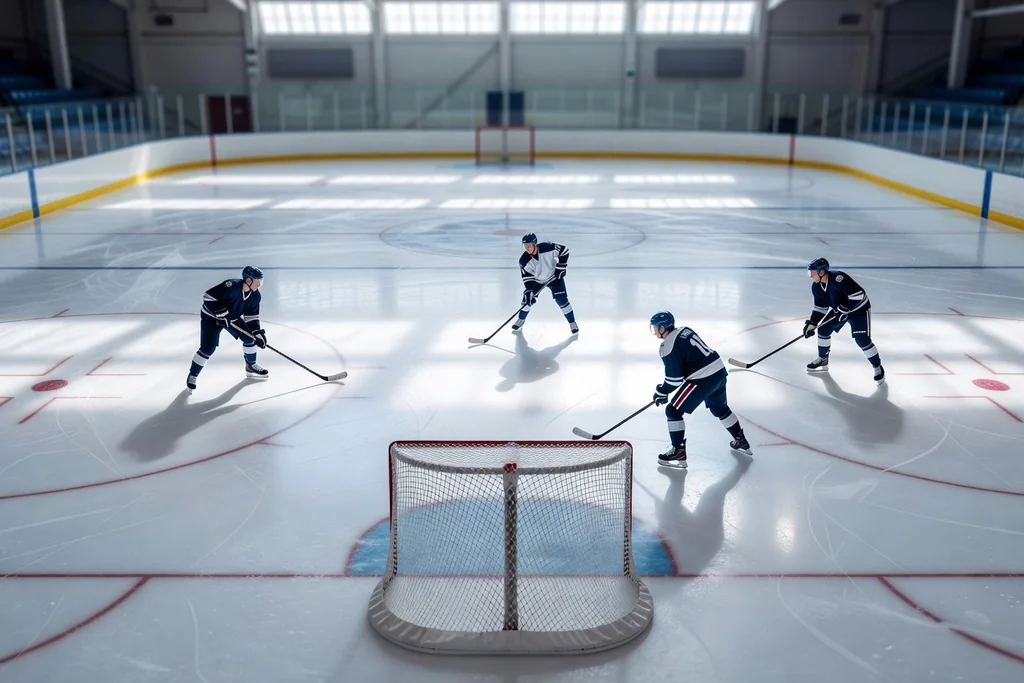
For a few minutes every game, the sport changes shape. When a player is sent to the penalty box, one team has an extra skater and the other has to survive. Those minutes are called special teams, and they are often the difference between a comfortable night and a frustrating one.
This article explains what actually changes when the numbers are uneven.
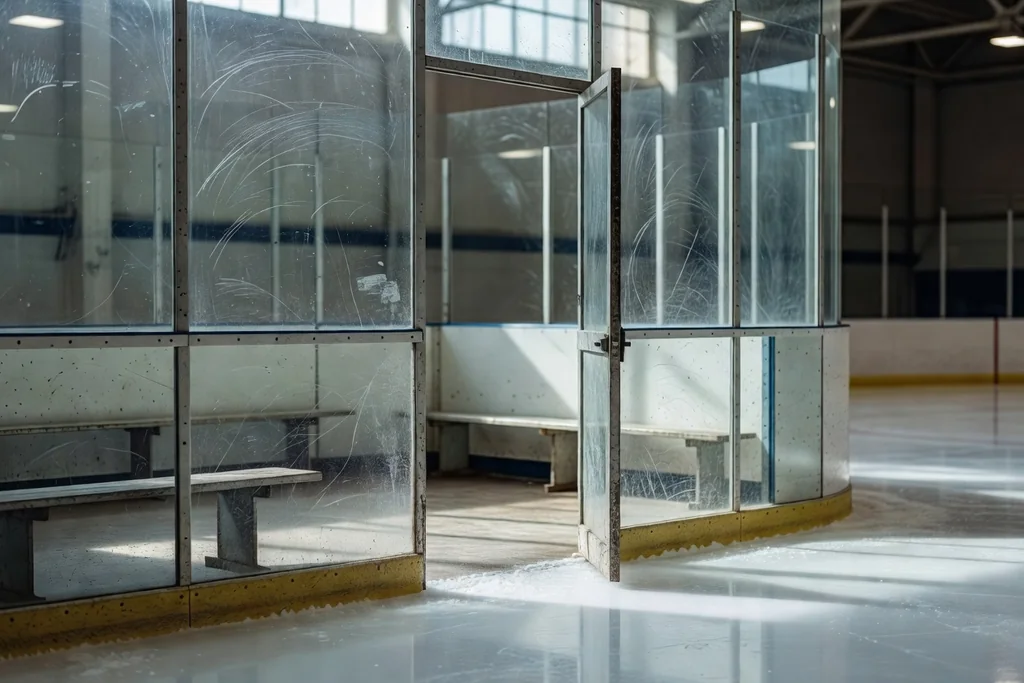
What the penalty box changes
Removing one player from the ice does not simply reduce a team by one sixth of its strength. It removes a set of options. With a player short, the defending team can no longer cover the same space in the same way, so the whole structure has to adapt: who pressures the puck, who protects the front of the net, and who is allowed to leave a zone.
That adaptation is why a short-handed unit is a specialised job rather than something any five players can do.
The power play: patience versus pressure
A team with an extra skater has to decide how to use the advantage. Some units move the puck patiently, waiting for a seam to open; others attack immediately, trying to force a mistake before the defenders settle. Both approaches work, and both fail when they are executed without discipline. The common thread is that the extra player must create a genuine numerical problem, not simply stand in an open space.
The penalty kill: choosing what to concede
Killing a penalty is a negotiation with probability. The defending unit cannot prevent everything, so it decides what to allow: shots from the outside rather than from the middle, passes around the perimeter rather than through it. A well-organised kill looks passive to a casual viewer and is doing something quite aggressive underneath.
How the two units differ
| Aspect | Power play | Penalty kill |
|---|---|---|
| Numbers | One extra skater | One fewer skater |
| Main aim | Create a high-quality chance | Remove the best options |
| Risk of mistakes | Turnovers leading to breakaways | Fatigue from long shifts |
| Typical personality | Patient or aggressive | Structured and compact |
What to watch on special teams
- Whether the extra skater actually draws a defender out of position.
- How quickly the kill clears the front of the net after a shot.
- Whether a short-handed unit changes at sensible moments rather than waiting to be trapped.
- Who is trusted to take the important faceoff at each end.
Roles, not labels
Calling a player a first-liner or a checker describes where he starts a shift, not what he can do. Modern rosters blur those lines: a defensive forward who kills penalties may also be trusted with the last minute of a one-goal game, and a scorer may be asked to win a board battle rather than take a shot. Reading a lineup by role — who takes key faceoffs, who starts in the defensive zone, who is on the ice when the game is tight — tells you more than any depth chart.
The map behind the schedule
Every schedule is a compromise. Someone has to fly the long legs, someone gets the back-to-back games, and someone plays the road trip that ends in a different time zone three nights running. When fans argue about fairness, they are usually arguing about which compromise is acceptable, not whether one exists. Understanding that the calendar is a negotiated document rather than a natural object makes the annual complaints far easier to follow.
What travel really costs
Travel does not simply make players tired; it takes away practice. A long trip means days spent in transit and hotel rooms instead of on the ice, which slows the installation of any new system. That is why teams guard their practice time so fiercely and why a heavy road stretch can leave a mark that lasts well after the trip ends. The cost is measured in repetitions lost, not just in hours slept.
Rivalries are built by repetition
A rivalry is rarely created by a single incident. It grows out of meeting the same opponent often enough that the games acquire history — the same matchups, the same grudges, the same crowd. That is why grouping teams geographically tends to produce better rivalries than any marketing campaign, and why a well-designed structure is really an argument about who should see whom, and how often.
Reading a box score honestly
A box score tells you what happened, not why. Shots, hits and minutes are records of events, and events without context can mislead badly: a team can be outplayed and still win, or dominate and lose. Used well, the numbers are a set of questions. Used badly, they become a verdict. The discipline is to treat every line as the beginning of an inquiry rather than the end of one.
The value of a slow build
Building a team is slower than fans would like and faster than it sometimes looks. Prospects need years, systems need months, and chemistry needs game after game of shared experience. Any plan that assumes instant results is really a plan to churn through people. The organisations that last are the ones willing to accept a boring middle — a season or two of being unremarkable while the foundation sets.
Where opinions are strongest
The loudest arguments in hockey are usually about things nobody can measure cleanly: effort, leadership, toughness, who deserves credit. That is not a reason to avoid them, but it is a reason to hold them lightly. When a debate has no referee, the useful move is to state your assumptions out loud. Half of every hockey argument evaporates the moment both sides say what they are taking for granted.
Special teams are where preparation becomes visible. The players are the same, the ice is the same, and yet the game suddenly looks like a choreographed problem — because, for those minutes, it is one.
Read next
How an NHL Season Is Structured
Preseason, regular season, trade deadline and playoffs: what each part is for.
Reading the NHL Standings Without Getting Lost
Points, games in hand, tie-breakers and why a table can be misleading in October.
What a Goaltender Actually Does: Roles and Habits
Positioning, reading the play and the routine that holds a goaltender together.