
Youth Sports Development: What Coaches Watch
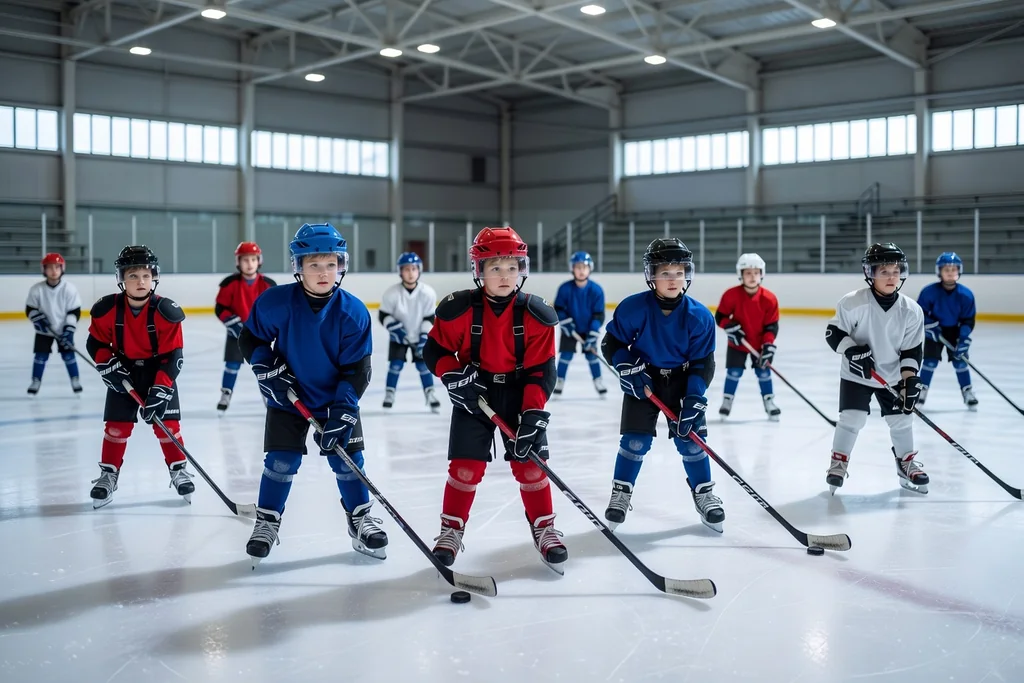
Youth sport is where every professional argument eventually lands. Whatever a league believes about skill, toughness or patience, those beliefs show up in how children are coached — and those choices are rarely examined as carefully as they deserve.
This article looks at what coaches actually watch when they are building young players.
Skills before systems
Young players need control: skating, handling, reading the game. Systems can be installed later, and a player who arrives at a professional level without the fundamentals rarely catches up. Coaching that prioritises results at the youngest ages often trades away the very thing that makes a career possible.
Habits matter more than highlights
Coaches consistently describe the same markers: does the player listen, does she recover after a mistake, does he make the simple play when a flashy one is available. These are not moral judgements; they are predictions about how much a player will improve.
The trap of early results
Children develop at different rates, and the strongest thirteen-year-old is often not the strongest twenty-year-old. Systems that select on early physical advantage are efficient at winning youth tournaments and inefficient at producing players.
What coaches watch for
| Marker | Why it matters |
|---|---|
| Skating and balance | Foundation for everything else |
| Decision-making | Hard to teach, easy to develop early |
| Response to errors | Predicts long-term improvement |
| Attitude to practice | The most patient signal of all |
What parents and fans should remember
- Development is not linear and not fast.
- Winning at a young age says little about a future career.
- Playing multiple sports tends to help rather than hurt.
- Enjoyment is not a distraction from development; it is a precondition.
Roles, not labels
Calling a player a first-liner or a checker describes where he starts a shift, not what he can do. Modern rosters blur those lines: a defensive forward who kills penalties may also be trusted with the last minute of a one-goal game, and a scorer may be asked to win a board battle rather than take a shot. Reading a lineup by role — who takes key faceoffs, who starts in the defensive zone, who is on the ice when the game is tight — tells you more than any depth chart.
The map behind the schedule
Every schedule is a compromise. Someone has to fly the long legs, someone gets the back-to-back games, and someone plays the road trip that ends in a different time zone three nights running. When fans argue about fairness, they are usually arguing about which compromise is acceptable, not whether one exists. Understanding that the calendar is a negotiated document rather than a natural object makes the annual complaints far easier to follow.
What travel really costs
Travel does not simply make players tired; it takes away practice. A long trip means days spent in transit and hotel rooms instead of on the ice, which slows the installation of any new system. That is why teams guard their practice time so fiercely and why a heavy road stretch can leave a mark that lasts well after the trip ends. The cost is measured in repetitions lost, not just in hours slept.
Rivalries are built by repetition
A rivalry is rarely created by a single incident. It grows out of meeting the same opponent often enough that the games acquire history — the same matchups, the same grudges, the same crowd. That is why grouping teams geographically tends to produce better rivalries than any marketing campaign, and why a well-designed structure is really an argument about who should see whom, and how often.
Reading a box score honestly
A box score tells you what happened, not why. Shots, hits and minutes are records of events, and events without context can mislead badly: a team can be outplayed and still win, or dominate and lose. Used well, the numbers are a set of questions. Used badly, they become a verdict. The discipline is to treat every line as the beginning of an inquiry rather than the end of one.
The value of a slow build
Building a team is slower than fans would like and faster than it sometimes looks. Prospects need years, systems need months, and chemistry needs game after game of shared experience. Any plan that assumes instant results is really a plan to churn through people. The organisations that last are the ones willing to accept a boring middle — a season or two of being unremarkable while the foundation sets.
Where opinions are strongest
The loudest arguments in hockey are usually about things nobody can measure cleanly: effort, leadership, toughness, who deserves credit. That is not a reason to avoid them, but it is a reason to hold them lightly. When a debate has no referee, the useful move is to state your assumptions out loud. Half of every hockey argument evaporates the moment both sides say what they are taking for granted.
The fan's job description
Being a fan is not a passive state. It involves choosing sources, deciding what to care about, and resisting the urge to treat every rumour as a promise. The supporters who enjoy the sport most tend to be the ones with a short list of things they follow closely and a long list of things they happily ignore. Attention is the scarce resource in a long season, and spending it deliberately is a skill.
The best programmes are boring on purpose. They teach the same things for years, resist shortcuts, and accept that the reward arrives much later than the effort.
Read next
Hockey Among the Big Leagues: Comparing Sports
What hockey shares with other leagues and where it goes its own way.
Basketball Basics for Hockey Fans
Possessions, pace and spacing, translated into hockey language.
Football and Hockey: Two Ways to Build a Season
Short calendars and long ones, and how that changes everything downstream.